 Science & TechnologyQ1
Which NASA spacecraft intentionally impacted Comet Tempel 1 in 2005 to study its interior material?
 Science & TechnologyQ2
Which Mars rover landed in January 2004 and explored Meridiani Planum?
 Science & TechnologyQ3
Which private spacecraft became the first to reach space twice within two weeks in 2004, winning the Ansari X Prize?
 Science & TechnologyQ4
Which NASA mission crashed into the Moon in 2009 as part of an experiment to search for water ice?
 Science & TechnologyQ5
Which NASA space observatory, launched in 2003, is optimized for infrared astronomy?
 Science & TechnologyQ6
Which NASA spacecraft launched in 2004 and later became the first to orbit Mercury?
 Science & TechnologyQ7
In 2006, which organization voted to reclassify Pluto as a dwarf planet?
 Science & TechnologyQ8
Which NASA mission successfully returned samples of comet dust to Earth in 2006?
 Science & TechnologyQ9
Which mission, launched in 2001, produced a detailed full-sky map of the cosmic microwave background?
 Science & TechnologyQ10
What was the name of the European probe that landed on Saturn’s moon Titan in 2005?
 Science & TechnologyQ11
Which space telescope, launched in 2009, was designed to search for exoplanets using the transit method?
 Science & TechnologyQ12
Which planet did the European Space Agency’s Venus Express begin orbiting in 2006?
Fact Checking the 2000s: What Space Missions Really Proved

The 2000s were a decade when space exploration became both more ambitious and more public, which meant genuine breakthroughs often traveled alongside rumors and wishful thinking. Sorting the two apart is easier when you anchor each claim to what a mission actually measured, photographed, sampled, or transmitted back to Earth.
Mars is a perfect example. In 2004, NASA’s twin rovers Spirit and Opportunity landed on opposite sides of the planet with a planned mission of about 90 Martian days. Both quickly rewrote expectations. Spirit explored Gusev Crater and later climbed the Columbia Hills, while Opportunity crossed Meridiani Planum and investigated layered rocks that told a story of ancient water. The key fact is not that they found living organisms, because they did not. What they did provide was strong, multiple lines of evidence that liquid water once interacted with Martian rocks, including minerals and textures consistent with past watery environments. Opportunity’s endurance became legendary, operating for nearly 15 years, long after anyone expected.
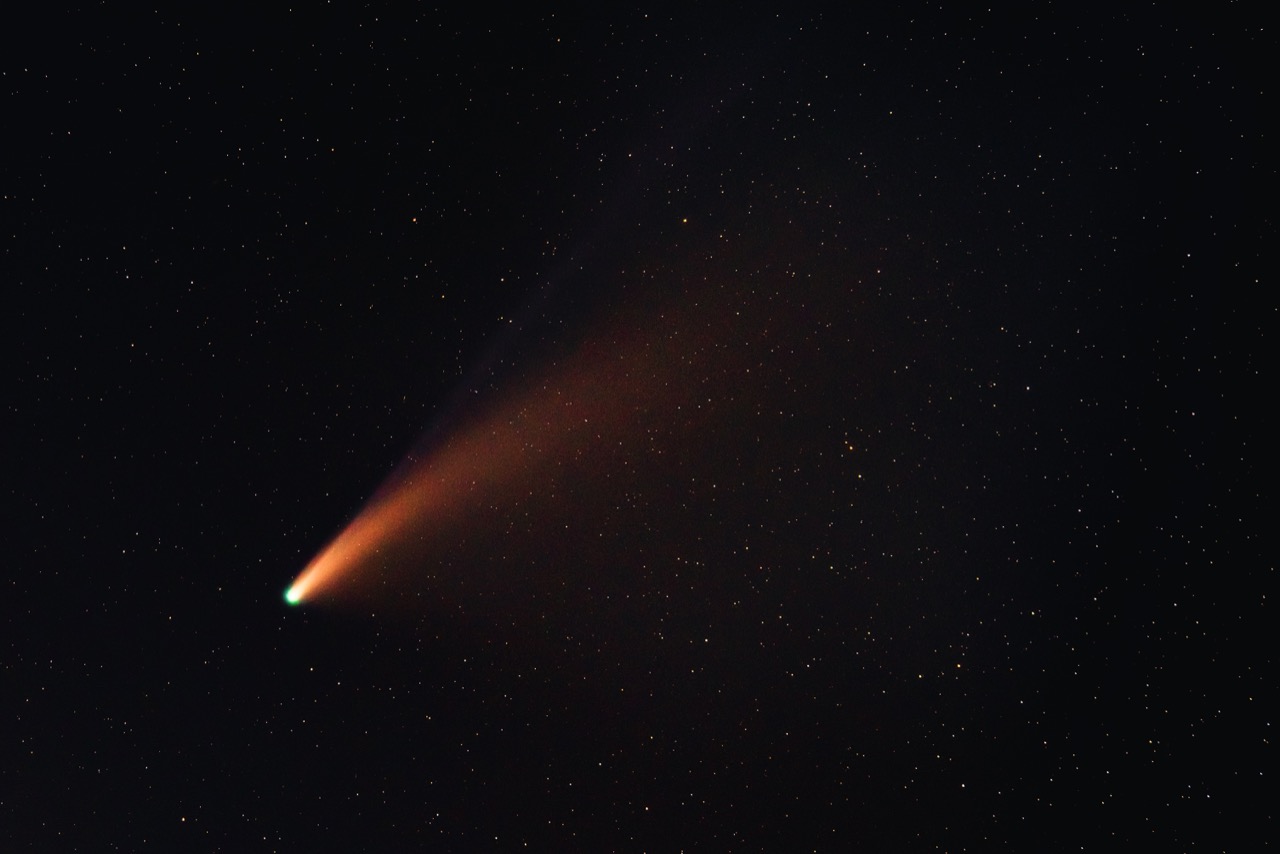
Another headline that sometimes gets distorted is comet sampling. NASA’s Stardust mission flew through the coma of Comet Wild 2 in 2004, collecting tiny grains in an aerogel collector and returning them to Earth in 2006. This was not a mission that “brought back a comet” or returned large chunks you could hold in your hand. It returned microscopic dust particles, and that distinction matters because the science came from laboratory analysis of those grains. Researchers found a surprising mix of materials, including minerals that form at high temperatures, which suggested that the early solar system was more dynamic and mixed than a simple cold outer region and hot inner region story.
Beyond our solar system, the 2000s helped turn exoplanets from a niche topic into a growing catalog. NASA’s Kepler spacecraft launched in 2009 and did not instantly photograph Earth-like worlds. Its method was to measure tiny dips in starlight as planets crossed in front of their stars. Kepler’s greatest contribution was statistical: showing that planets are extremely common, with a wide range of sizes and orbits. Around the same time, space telescopes like Hubble also played a major role in characterizing exoplanet atmospheres in early, limited ways, but no 2000s telescope provided crisp “portraits” of Earth 2.0.
Pluto’s status shift is another frequent source of confusion. Pluto was not “demoted because it got smaller” or because scientists suddenly disliked it. In 2006, the International Astronomical Union created a formal definition of planet that required, among other things, clearing the neighborhood around its orbit. Pluto did not meet that criterion, so it was classified as a dwarf planet. This was a change in definition, not a discovery that Pluto had changed.
The decade also saw the rise of private spaceflight in a way that was easy to misunderstand. In 2004, SpaceShipOne became the first privately funded crewed spacecraft to reach space twice within two weeks, winning the Ansari X Prize. These were suborbital flights, meaning they went up and came back down without completing an orbit around Earth. Calling it a private “orbit” would be incorrect, but calling it a turning point for commercial space ambitions is fair.
Finally, the 2000s sharpened our view of the universe’s oldest light. NASA’s Wilkinson Microwave Anisotropy Probe, launched in 2001, mapped the cosmic microwave background with much higher precision than earlier efforts. It did not take a photograph of the Big Bang itself, but it did measure subtle temperature differences across the sky that helped pin down the age, composition, and geometry of the universe with remarkable confidence.
Taken together, the decade’s missions show how space science advances: not by single dramatic announcements, but by careful measurements that survive repeated checks. The real story is often more nuanced than the myth, and usually more interesting too.
Up next in Science & Technology
All 20 Science & TechnologyNew
Space Law and Discovery in the 2000s
 Science & TechnologyNew
Rovers, Comets and Saturn Probes
 Science & TechnologyNew
Space Missions of the 2000s
 Science & TechnologyNew
Gadgets That Defined the 2000s
 Science & TechnologyNew
DVDs, DVRs and 2000s Home Tech
 Science & TechnologyNew